Showing posts with label Econ Tools. Show all posts

Monday, November 14, 2011

You said you want a revolution?

This week, we had email exchanges with some colleagues about Harvard undergraduate students walked out of Mankiw's introductory economics class. The discussion was not so much about the walk-out (and much less, or nothing, about the reactions, as in here, here and here). The colleagues were talking about limitations of economic theory in explaining many phenomena, the need to give more room for multidisciplinary analytic framework, and to call for a revision for, even revolution in, economic curriculum and to another revolution in economic thinking.

Here's the summary of my response. First, no one would disagree that economic theory is limited. It provides a framework of analysis, not the framework. All economic models are based on certain assumptions. Not that we believe that the assumptions would (should) hold. But it serves as a benchmark condition to argue what would happen if the assumptions hold.

Second, no doubt that multidisciplinary analysis is good. Economists, and economists, would benefit from talking to, or collaborating with, scholars from other disciplines. But multidisciplinary requires each scholar have solid background on his/her own discipline. Imagine two people, an Indonesian an American, discussing their cultures. If the Indonesian doesn't have a solid understanding about Indonesian culture, the dialogue would be a lecture on American culture, not a cross-cultural one.

Third, while the curriculum and teaching methods should always be revisited to reflect current developments, we need to ask how much information we can (should) feed the students. Besides, the purpose of education and teaching is not to provide answers. The purpose is to make students asking the right questions (and find the answers) by providing analytic framework.

I am not sure about how much revisions we could have in microeconomics. It basically tells us that resources are scarce, so we need to make choices, which imply opportunity costs and give us trade-offs. Then there is demand and supply analysis, which, under a certain assumptions of how the market works, will define the prices. But we don't assume that market works all the time, so there is a substantial discussion of market failure in externality, public goods, uncertainty and game theory chapters. That's usually what we covers in 2 semester of microeconomics. There are more applications, such the agricultural household model, different game theoretical analysis and many more, which we usually teach in more advanced classes.

On the other hand, macroeconomics is a very dynamic subject. To be honest, I am not really catching up with the subject. But to catch up with the current state-of-the-art, including to criticize some mainstream theories, still you need to have the solid fundamentals. You can not, for example, argue for divergence in growth without starting from the basic Solow model which implies convergence. To criticize efficient market hypothesis you need to start from the AD-AS, Keynesian-cross and IS-LM models. No short-cut to do that.

Yes, Keynesian was a revolution in economics. Prior to Keynes, economists did not think of national income, and the relationships between money, interest and employment. In short, people never thought economics as a macro system, hence the term macroeconomics. But since then, (macro)economics have evolved, leaving us few rooms for revolutionary thoughts. Even Keynesian was at one time in a crisis, when excessive government's intervention in the economy led to high inflation without growth in production.

Honestly, the room for another revolution is getting much and much smaller now. Most big ideas have been delivered. The frontiers have been pretty much explored. Of course, there are still many unexplored spots in the forest. That is the real call: to fill the missing puzzles through new theoretical and empirical researches.


Tuesday, June 29, 2010

Is Economics Hard?

Recently, there has been a discussion in the blogsphere, sparked by a short essay of Kartik Athreya: Economics is Hard, Don't Let Bloggers Tell You Otherwise.

Well, economics is hard, at least for me, and I believe for the baristas here too, who have spent days and nights trying to understand one chapter of, say, a standard micro or macro grad textbook.

Then, why the baristas here seemingly make economics fun?

Because it is indeed fun, and we want to share the fun to you all, including the non-economics students, by skipping most of those technicalities and jargons. We at the Cafe want to convey a simple message that you can use economics to see things differently. The most politically motivated purpose is probably just to warn you against ill-informed press corps.

I have no illusion that hanging out in the Cafe would substitute for a proper formal economic education -- but it is equally annoying to see some people believe he/she has mastered economics simply by reading one or two popular books by Stiglitz or Krugman. This is why sometimes we launch a sharp-tongued attack against his/her arguments (note: the argument, not personal)

Is econ hard? Yes. So are anthropology, political science, English literature, biology, and any serious attempt to understand things rationally and systematically.

Friday, April 02, 2010

For Auction: Freshman Seats

Greg Mankiw told us that Harvard admission committee has decided to auction off 100 freshman seats for the next academic year to overcome their budget shortage.

Of course, you may want to be little bit careful in reading the date of such announcement.

On the second thought, the idea is not as outlandish at it may seem. What about the FEUI follows the suit and would launch an open auction for, say, 30 seats next year -- and use the money to buy books for library and send their junior lecturer to study abroad?

I think it is a good idea as long as they make it open and transparent. On a smaller scale, they can try to auction off seats in Aco's class -- I wonder how much the true market value of his lectures is :-D

What do you think?

Tuesday, May 26, 2009

Et Tu, Jekus?

That was Kate's reply five minutes after I emailed her this JK's posting in his Kompasiana blog --with a snobbish show-off note saying "sent from Blackberry" at the bottom of her reply.

And she is right. JK's writing is a terrible example on how one misunderstands market economy, and coming from JK, the current VP and next presidential candidate, the inability to comprehend basic economics and the economy is even more depressing.

In his opening paragraph, JK argues that liberalization would put farmers into danger. But does he really think that most of Indonesians are rice farmers? For a presidential candidate, ideally he should be more knowledgeable on what most Indonesians are actually doing for life, so, if elected, will pick the policy benefiting the majority of people.

But is he up to expectation?

Your barista, Aco, coauthored a forthcoming paper on the political economy of rice and fuel pricing. There you'll find that 75 percent of total households in Indonesia do not grow rice and 82 percent are net rice consumers. Even in rural area, 63 percent of rural households are not rice growers and total around 72 percent of rural households are net consumers of rice

What does it have something to do with liberalization? If importing rice means lower rice price, at least 75 percent of national households and 63 percent rural households will benefit from that free market policy.

What to do with the rest? My take is two things: first, if import led them to fell down below poverty line, they deserve to get across the boards anti-poverty transfer, like direct cash transfer scheme --not because they are rice growers, but because they are now poor. Second, and more importantly, do not block their access to move into more dynamic sectors in the economy. And getting rid the obstacles they face means removing anti market competition policy like inflexible labor regulations, corruption, and lack of infrastructure.

In the second paragraph, JK thinks that in the international trade the developing countries are victimized as price takers, while the developed countries reap most benefits as price makers. Really?

Last year, as all of you know, there was a steep increase of the world's price of (primary) commodities produced by developing countries --like food and agriculture products. It would not have been the case if the developed countries, as the major consumers, could set or make the price as JK thinks.

But maybe JK is right, the current international trade of agriculture product is not fair because the developed countries as producers, and the competitors of developing countries, deliberately distort the market by applying high subsidy and trade barriers --in other words, violating free market principles. By that, here, what we want is, well, free trade so that we can sell our products and fairly compete in their markets too.

And on his remark that the price 1 kg of cocoa is far below the price of 1 kg of Silverqueen, what should I say? You just don't make one kg Silverqueen with one kg cocoa. You need to put some milk and mix it with other ingredients. Then you want to wrap them in in a nice package, advertise and distribute them to stores.

Still, you can not write your price tag as high as you want, if you still want somebody to buy your products. You need to consider the price of Ghirardeli, Toblerone, Lindt, Cap Jago, Haribo, Trebor, licorice, etc --all are your products' direct competitors -- as well as its indirect substitutes.

If you let market to work, your price reflects only normal profit, or some temporary supernormal profit that is always subject to natural creative destruction. It is not fair if you get government protection or commit in unlawful acts against your competitor. But you can not blame market mechanism for these faults, because what is unfair is the government discriminative anti-market protection.

Bottom line: it is rather unintelligent to support the argument for fairness by comparing cocoa's price to Silverqueen's and asserting an upside-down argument blaming market mechanism for the anti-market outcome.

Sunday, May 24, 2009

Back to Basics

Greg Mankiw, himself the author of an excellent introductory economics textbook, offers several subtle changes in teaching Econ 101 amidst the recent crisis by giving more emphasize on the role of financial institutions, the effects of leverage, the limits of monetary policy, and the challenge of forecasting.

Sorry, rightly so, no neoliberalism on the menu.

Mankiw also noted that:
Despite the enormity of recent events, the principles of economics are largely unchanged. Students still need to learn about the gains from trade, supply and demand, the efficiency properties of market outcomes, and so on. These topics will remain the bread-and-butter of introductory courses.
Which brings me to wonder after reading some protectionist pundits' and faux economists' remarks on recent neolib hullabaloos: what did they learn from their introductory course --if they ever had taken it?

Friday, May 22, 2009

Error by Omission or Maybe Something Else

Against free market, Kwik Kian Gie wrote:
Because anything goes without government regulation, she (the producer) starts to conduct competitive strategy that kills her competitors through dirty practice, supported by her wealth. For example, she sells her products at price below cost of production. She would suffer loss, but she can bear it, thanks to her already accumulated wealth. At such price, all competitors would lose and go bankrupt. Except she, who has the largest capital. After the competitors go bankrupt, with her monopoly power, she increases her product's price very steeply.
Let me restate my take on predatory pricing: as long as there is no government regulation discriminating other producers, I don't see it as a problem --or dirty practice. And letting the market work will set the price back at producer's normal profit level. But you can not see that in Kwik's story because it was not yet finished and the next part of the story was omitted either by error or incomprehension.

Why?

The supernormal profit from after-predatory pricing monopoly power will attract the old producers and new producers to enter the market, as long as there is no government restriction. This will keep the price down again.

Also, any monopolist is subject to the consumer's demand -if you look at demand function in a monopolistic market, it's downward sloping. Thus, first, charging higher price means lower quantity demanded. Second, consumers do not solely look at a single product, she will always take into account the substitutes. For instance, if the price of espresso goes crazy, even a coffee freak like me will switch to teh botol. As a result, the predator needs to consider a whole arrays of competitors.

Where do I get this idea from? Econ 101 textbook. And by the way, the textbook always states that what matters for economic agent's decision is the marginal cost and marginal revenue (or benefit), not accumulated wealth.

Your baristas talked about this misleading op-ed during the break, and perhaps Ap will join me to serve you his comment.

Thursday, April 23, 2009

Meta-what?

Can anyone give me idea what exactly a meta-commodity means, so that I can understand the following sentence?
We should remember that food constitutes a meta-commodity that cannot be treated merely according to economic calculations.
Does it mean a sacred stuff, like amulet or keris --the Javanese dagger? But even we can calculate the economic value, the market price, of keris, no?

Thursday, February 26, 2009

Dark Stuff That Makes You Statistically Smart

Ziliak and McCloskey, by way of Tim Harford, reveal that Student's t-test, a very important statistical test, refers to William Sealy Gosset. This man wanted to know how many experiment with hops, malt, and barley, needs to be done to produce a considerable confidence of the result in pursuit of good beer.

That beer is known as Guinness, the exquisite dark stuff that probably is the greatest Irish contribution to the world. Better than James Joyce or the U2.

Lift your pint and make a toast for Gosset, but I am not sure for which one: the Guinness or his t-test. Maybe both.

Tuesday, February 03, 2009

Transfer Is Not Social Cost

I can not believe that Yudi Latif, in today's Kompas Analisis Politik, doesn't get the social cost-benefit analysis of general election right (and presumably, the Kompas editor, too).

We know the benefit of general election is to have better government and public services provision. But apparently it takes a bit of more time to understand its cost.

Yudi thinks the political ads spending is social cost. It is not. The same goes for the spending of political consultancy, polling, printing banners, free T-shirt, and even money politics. They are all transfers. The money does not go out of the economy --or GNP, as Yudi said. It just has the ownership shift from politicians to advertising company, political consultant, T-shirt maker, and potential voters.

Does it mean general election doesn't have social cost? No. When you involve in and spend resources for general election-related activities, alternatively you can work on something more productive --perhaps by staying in academics. Your time and energy to otherwise produce good lecture is the social cost.

The overall election's social cost can be higher or lower than the benefit, but you'd better be clear on this. Particularly when you relate this to someone's argument that democracy is more suitable to the nation with economic surplus than one with deficit (whatever it may mean).

Maybe, but surely not because of such cost-benefit analysis.

Monday, November 24, 2008

CPO Price Dictator (If Any)

Khudori, in his op-ed in Kompas, lamented that:
We are indeed the world largest CPO exporter, but the price of Indonesian CPO has been dictated by Rotterdam spot market and Kuala Lumpur future market.
and he concluded
Last, as second largest CPO producer after Malaysia, Indonesia should be taking important role in the searching and making of product's price, not dictated by others.
Well, of course the equilibrium price is determined by not only supply (where Indonesia belongs to), but also demand (the rest of the world whose growth has been slumped). And how are you gonna "take a role" in making up the price? Reducing the CPO production, or setting up a cartel with Malaysia? It might not work either, since, perhaps, there are numerous substitute for CPO. I don't know.

By the way, does anyone know how much does the palm cooking oil price in Jakarta cost lately? Palm cooking oil consumer may not be happy, if you cut the CPO production.

Now which one is which?

Sunday, October 19, 2008

How The Baristas Here Usually Think About Thing

I read in Kompas, now the price of cooking oil --the palm oil -- decreases. Sounds good? Hang on a sec. What about this report from the same daily: the cost of growing crude palm doesn't add up to the market price for farmers like Bahori and Syaifudin.

Economics would not tell you whether this development is a good or bad thing (You've been warned: be curious to economist who loves to play around with too much normative statements based on moral grounds). Instead, economics can tell you that as world demand slows down, the price goes down, and some of input producers adjust their production based on their cost structure --and the other way around.

It is why in the first lecture of any Econ 101, the first lesson is that economics deals with positive argument --what it is, not what ought to be. It applies cost benefit framework in looking at thing, and argue for, if not a Pareto efficiency, a Kaldor-Hick efficiency --what gives you larger net benefit or least cost. The students are trained, as simple as it may sound, not to think single-handedly but to always look at the other side of story and apply the simple idea of opportunity cost while estimating the cost of an action.

That is why I often feel desperate when reading the media or upon hearing politicians'/pundit's comments.

Sunday, September 28, 2008

I Hate To Do This Again and Again, and...

...I wish that Kompas had journalists like David Leonhardt, Gretchen Morgenson, or David Warsh in their economics desk, so that some misunderstandings like the following do not come up too often on the paper.
An economic revolution has been started in the late President Ronald Reagan's era. The President believed, in accordance to Chicago Boys (the University of Chicago alumni), that market would work more dynamic and flexible if unregulated. In other words, the role and existence of bureaucracy indeed becomes impediment and prevent market and economic flexibility.
OK, it makes sense, but then the author moves on.
This opinion beats the MIT economist's view, who opts for market regulation. The reason is that there are premises that can not be answered by market (mechanism), that is, the element of greed, that can induce the market players, including the ones in financial sector, to overly exploit their money-grubbing instinct, wanting to make profit by gambling in the speculative (financial) products.
Well, I am afraid that if you open any standard Econ 101 textbook, say from Paul Samuelson's classic, himself an MIT's giant, the reason for market regulation has nothing, I repeat, alas, nothing to do with human's greed. Instead the basic economics itself points out some reasons why market sometimes fails, hence needs some government intervention.

I give you hints: go to discussions on monopoly (or non price-taking behavior), externalities, asymmetric information, and public goods.

Monday, August 25, 2008

The economics of religious decision

Here is my first attempt to develop an economic model for religion and religious decision. Still far from finished, I only tried to construct the foundations.

This is the background. Several times I was asked these questions: "Do you believe in God?" or "Why do you perform rituals? Doesn't it contradict the rationality arguments?"

My typical answer to the first one is, "I believe for a certain probability that God (and afterlife) exists." For the second one, I usually replied, "In case God does exist, I need to hedge my risk by allocating some time for performing rituals."

A follow-up questions will, usually be, "There are different choices of religion. Will all or some of them provide you a good hedging mechanism (or return on investment), or only one of them will? If more than one do, then why don't you shop around different religions? If there is only one 'correct' religion, then how do you know that your choice is the correct one?"

Well, for sure, I never believe in any monopoly, including monopoly of truth. Hence, I believe that there are many pathways for salvation. However, switching cost is high that it will not be optimal for me to switch to, or shop around, different options.

The bottom line is, yes, religious decision is a rational one.

Wednesday, April 02, 2008

Which Rice Price is Which

I am confused.

Some months ago, when the domestic rice price was high --due to shortage--, and the international price low, we didn't want to import because, some said, it would hurt the rice farmers, eventhough when majority net consumers would love to have lower imported rice price.

Now, when the domestic price is low --due to harvest season--, and the international price high, we don't want to export because, some says, it would be good to have large domestic reserve to protect the rice consumers, eventhough at the cost of, well, the rice farmers who may gain for that high international price.

So which one is which --defending the rice farmers or consumers? I am scratching my head.

Meanwhile, if BPS said that in January 2008, in 11 regions the farmer's term of trade increases while the other 11 otherwise, but nationally it goes up by 0.04 percent, can we say that the farmer's purchasing power decline, as that headline's subtitle suggest? Note, too, it was on January when the harvest didn't come yet.

On why the rice price persists high despite harvest time, it's the demand-supply mechanism. The article itself says that the demand increases significantly in Batam, Bangka, Pontianak, and Pekanbaru. Can you guess why? Yes, because international price and demand is high, exporting rice is profitable, and in those area, it is likely easier to sell the rice out. The law of one price, the economist friend would tell you.

If you really want to help rice farmers, what you should do is not to pile up national reserves, but get them more access to international market to outdo the middlemen that you keep blaming on the disparity between consumer and producer rice price. Or in other words, make the rice middlemen services market competitive and let the rice farmers enjoy the high international rice --if you really want to defend them, of course.

Make up your mind, sire

Monday, March 24, 2008

The science of interaction

Our guest blogger, Tirta, raises the issue on the individual vs. collective behavior, and the importance of taking the distinction into account.
- Manager
The science of interaction
by Tirta

I have the following issue with Milton Friedman's dictum that economic assumptions are only as good as the predictions they make.

The dictum implies that in any economic model, what really happens in individual minds doesn't really matter, as long as the collective phenomenon of interest can be predicted. In fact, one of the criticisms against the recent interest in behavioral economics is that at the aggregate level, there's no such thing as irrationality. Individuals may be irrational, but society as a whole is rational – as shown by the success of rational models in their predictions of many collective actions.

Now this is all fine, if there is only one explanation behind each phenomenon of interest. But what if the phenomenon of interest can be predicted by two differing models built upon two dissociable assumptions behind the action of the individual – one being more psychologically realistic than the other? Should we choose the simpler assumption (i.e. homo economicus) for the sake of neat predictions? Or should we pick the more realistic one (e.g. homo behavioral-economicus, homo neuro-economicus) at the expense of perhaps less clear and less fruitful predictions?

I think there is a danger in the tendency to prefer simple and neat models to complex and more complicated ones. Parsimony as a scientific criterion doesn't always apply, at least when it comes to explaining how the human mind works. A century of psychological explorations have shown that the human mind and brain are necessarily complicated and, as far as reality goes, cannot be further simplified.

So it seems that we are left with either making good-collective predictions based on bad-individual assumptions, or making bad-collective predictions based on good-individual assumptions.

Can we make good-collective predictions based on good-individual assumptions?

In principle yes, and I think the key lies in understanding how the actions of individuals result in collective phenomena. The more we understand about the science of interaction, the less we have to rely on making unrealistic assumptions about individuals, while at the same time maintaining our accuracy in predicting the emergence of collective actions.

Now I personally don't know how far we've come with the science of interaction. But I sense that, if anything, the end result of understanding how different individuals interact with one another in collective settings would be better and more fruitful economic predictions.

Monday, February 18, 2008

How does economics change the world?

From a discussion thread in an online forum, someone asked a question: how do economics (and economists) save the poor of the world?
Ladies and gents, I'm on the fence here. I need some sound examples of how higher order economics has benefited the people in the LDCs. Give me proof that with all he equations formulated, and theories being expounded, the men and women on the ground in sub Saharan Africa benefit or stand to benefit from what economists publish in journals or ruminate about in their ivy tower armchairs. ... It also doesn't help when you have Muhammed Yunus, the founder of the Grameen Bank, proclaiming himself the impracticality of his academic work.
Many people responded by pointing some examples -- from Amartya Sen, Jeffrey Sachs to the Poverty Action Lab. But this is what I consider the best reply:
Honestly, if your goal is to help people, become a nurse or a midwife and move to Africa. I'm not being sarcastic, I'm being serious. That's the way to directly help people who need it, in a real, immediate, life-changing way.

Becoming an economist is at least as much about your own ego as it is about saving the world. To believe that you can help people by getting a PhD, you have to believe in a couple of things. First, you have to believe in slow, one-step-forward- and-two-steps-back progress. You have to believe that the long run matters, that it is conscionable to sacrifice today's wellbeing for the sake of the next generation. You have to be pretty optimistic. And second (this is where the ego comes in) you have to believe that you can add something to the discussion. That the ideas you have might just be the ones that change the world. And you have to be willing to spend a hell of a lot of time and energy on yourself before you will be in a position to help anyone else.

Research economics is about helping people the same way space exploration is about helping people: it contributes to our understanding of the world. And there are some short-run, oh-by-the-way findings that have practical applications that really help people, but those aren't the focus most of the time, and they certainly aren't what the training emphasizes.

And even when economists do have good ideas, there's a lot of politics between the proof and the implementation. So seriously, if your only goal is to help people, do it some other way.

But if you want to have a chance at participating in changing the way people think, at asking questions that no one else has thought of, if you think there is a chance that you will someday look at something in a completely new way, and you're willing to work your *** off just to see if that glimpse pays off -- then become an economist. If you thrive on poking holes in ideas, on asking "what if" just because you can, playing devil's advocate to your own devil's advocate, then grad school is for you. Just don't go into it believing that you are doing it for the good of mankind, or you are only setting yourself up for frustration. Coding in STATA does not save lives.
I remember someone in Exegesis and Ekonomi-Politilk Indonesia constantly asked why the knowledge of economists could not solve the problem of soybean price hike. I don't know why this guy even look for solutions in the blogsphere at all.


Monday, February 04, 2008

The economist of Cinta Laura

With Sjamsu

I can forgive you if you don't know who this year Nobel Laureates were. But if you don't know who Cinta Laura is, dude... get a life. She's the Indonesian Paris Hilton, in case you wonder. No, no... don't think of the video scandal. Cinta's still innocent. And she doesn't drive, yet.

Sjamsu just circulated the famous quotes of Cinta Laura. Thanks to someone crazy enough to collect them from various tabloids and infotainment interviews. We thought that some of her comments are examples of real-world applications of economic concepts. Here are some examples. I keep the Indonesian version because, well, it's hard to translate his words in any language to be honest.

Just a note: although the comments are in Indonesian, read them in English pronunciation.

Gains from trade:
"Bahasa Indonesia saya buruk sekali, jadi Cinta will be going to Australia to improve Bahasa Indonesia Cinta."

Efficiency and constraint (the government must learn how to do that):
"Dari kecil papa sudah punya banyak mobil waktu di German kita punya 5 mobil tapi karena garagenya tidak cukup jadi papa menjual mobil-mobil itu tinggal 2. Tapi aku paling suka yang Audi A4."

Comparative advantage:
"Kamu nggak cocok pake logat english karena kamu dari kecil tinggal di Indonesia," Cinta Laura told Samuel, a teenage newcomer artist who has an 'Indo' face but was born and grew up in Indonesia.

Intertemporal optimization:
"Banyak orang-orang yang ikut dunia entertainment langsung drop out of school, itu menurut aku that's really really stupid. Soalnya mereka nggak pikirin long term."

Coner solution in utility maximization (if one good is free, one will only consume that good and set the consumption of the other one zero):
"Aku kalow di dalam negeri sukanya liburan ke Bali karna aku punya apartmen disana."

Bequest in the overlapping generation model:
"Aku udah keliling keliling dunia, ke London, German and several countries karena papaku General Manager di Hyatt."

Survival model of firms -- heterogeneity matters:
"Not all beautiful people bisa menjadi famous."

Matching definition of transfer beneficiary:
"Aku gak suka dengan istilah boyfriend... aku lebih suka disebut teman dekat..teman buat punching, running, lari lari kecil ..."

What the f@!#???:
"Cinta mengucapkan selamat puasa semuanya. Rock on..!"

Thursday, December 13, 2007

Problem #1: Microeconomics Exam

In today's Jakarta Post op-ed, Professor Rokhmin Dahuri wrote that capitalism depletes natural resource and precedes global warming. Discuss the flaw, if any, in his argument.

Hint: Use your knowledge of Demsetz's Theory of Property Right,or Coase Theorem (in pdf), or Tragedy of the Commons. No math needed.

Saturday, November 10, 2007

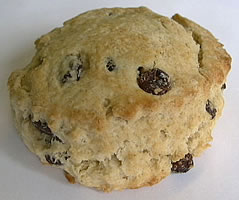
A Muffin Jam

Suppose you know that for our health, shortbread is better than muffin. By that, substituting muffin with shortbread in our diet is good. Yet, many people, as they love muffin, understandably, will not alter their diet to shortbread by persuasion, even for the noble purpose such as public health.

In anticipation to that, the cafe introduces more shortbread at low price, and due its limited capacity, they can not provide you with muffin as many as before. And, it's a small wonder that muffin eaters grumble. They complain that muffin is now hard to find.

But on the second thought, wouldn't it be the perfectly predictable, and desirable, effect --to make the muffin relative price to shortbread rises? Sooner or later, they will respond and switch to shortbread, and as time goes, switching will be less painful.

Now, replace health, shortbread, muffin, the cafe, muffin relative price increase, and switching responsiveness; with travel time, the busway, driving your private car, Jakarta busy thoroughfares,traffic jam, and elasticity of substitution. I hope by now you get the idea, thanks to Econ 101.

Oh, and the muffin eaters/grumblers, they are the popular voices oftenly appear in newspapers, TVs, and, well, politicians' words. Just want to say: come off it, mates!

Tuesday, October 30, 2007

The Economics of Oil Muffin Price

Let's talk about a commodity, a muffin. This week the price of muffin goes up significantly and sets a new record after 20 years. People raise their eyebrow. Some point out that it is the work of muffin cartel, but it seems implausible since like any cartel, its member tends to break the agreement, produce muffin above agreed number, much more when the price is high.

It turns out that there is a sharp increase for demand of muffin coming from new growing-rich customers, Rizal and AP, while at the same time, the demand from traditional muffin eaters, the Manager and Aco, remains high. On the other hand, the muffin producer, Ujang (and his cartel gang) and Sjamsu (outside the gang), due to some technological capacity problem, can not increase the supply.

No wonder, as any Econ 101 student understands it well, the price goes up. Neither speculation nor conspiracy theory is at play.

Now, for some reason, you want the price of muffin down. One way to do that is to boost the supply, which is as we know, Sjamsu and Ujang can not make it. The alternative is then to reduce the demand of muffin. Econ 101 tells you that the rise of price will automatically bring substitution effect --Rizal and AP and Manager and Aco would somehow eat less muffin and more schone, sooner or later. The price signal itself would lead you to the new equilibrium (how much muffin, schone, and any other goods to consume) based on the new scarcity problem. It is called the market mechanism, an invisible hand.

Now, do you think an answer on how to tame soaring muffin price is to ask for a deliberate collective sacrifice from Rizal, AP, Aco and Manager to reduce their appetite for muffin; Sjamsu and Ujang to add up production, no matter what; and the Manager to stop bullying Ujang's friends: is a plausible one?

Hint: read one of op-eds in Kompas daily, page four, Monday, Oct 29, 2007. It's available online, too.